

 Back to Blogs
What Happens When Downspouts Are Improperly Placed in Urban Homes?
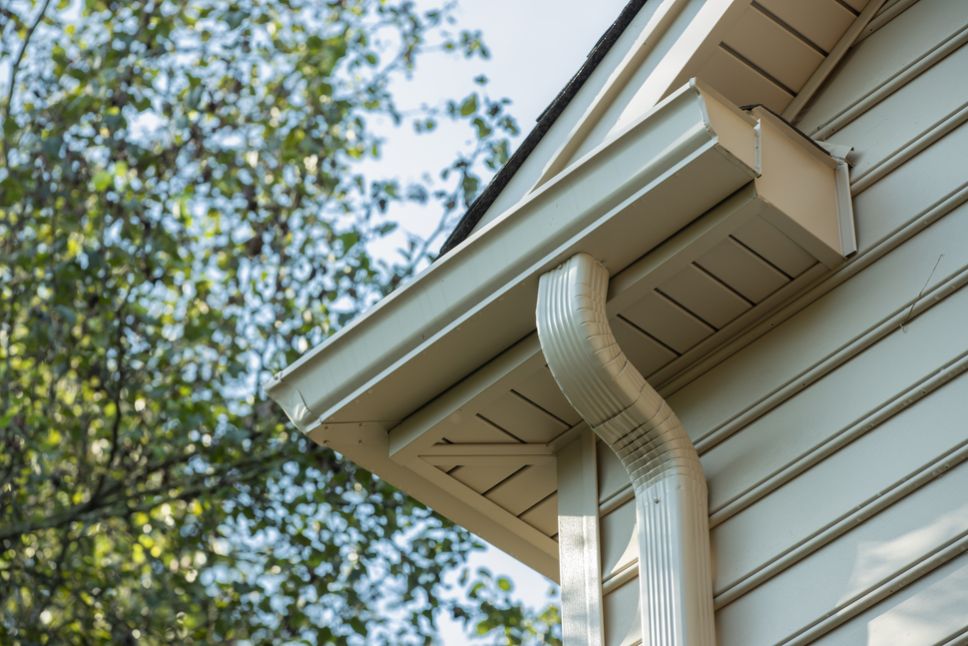
Most Philadelphia homeowners spend time thinking about their windows, siding, and roofing, and rightfully so. But there is one exterior element that quietly causes some of the most expensive damage a home can face: the downspout. More specifically, a downspout that is in the wrong place.
If water is not being directed away from your home correctly, it does not just sit there. It finds a way in, and once it does, the problems stack up fast. This guide breaks down exactly what goes wrong when downspout placement is off, what it means for your home's structure, and how you can get ahead of it before the damage becomes a costly repair bill.
Why Downspout Placement Matters More in Urban Homes
Philadelphia row homes, twin houses, and closely packed urban properties face a unique challenge: there is very little yard to absorb runoff. When a downspout discharges water too close to a foundation, against a neighboring property, or onto an impermeable surface like a driveway or sidewalk, that water has nowhere useful to go.
In suburban homes, a slightly off-angle downspout might just create a muddy patch in the yard. In a Philadelphia neighborhood, the same problem can push water straight into your basement, erode your foundation, or flood a shared alleyway.
Urban stormwater management is a real concern, especially during the intense rain events the Philadelphia region sees throughout spring and fall. Getting the downspout discharge location right is not optional; it is essential.
5 Serious Problems Caused by Improperly Placed Downspouts
1. Foundation Damage and Water Infiltration
This is the big one. When a downspout deposits water directly against your home's foundation, that water saturates the soil and creates hydrostatic pressure against your basement walls. Over time, this leads to cracks, seepage, and, in severe cases, structural compromise.
Philadelphia homes, especially older ones with stone or brick foundations, are particularly vulnerable. Water does not need a big gap to sneak in. It finds the smallest weakness and exploits it, season after season.
2. Basement Flooding
You might not connect a wet basement to your gutters and downspouts right away, but the link is extremely common. If your gutter drainage system is sending water to the wrong spot, it is almost certainly contributing to moisture problems below grade.
Basement flooding means damaged flooring, mold growth, ruined belongings, and reduced home value. It also means potential health concerns for anyone living in the home.
3. Soil Erosion Around the Home's Perimeter
Improperly placed downspouts concentrate a large volume of water into a single spot, repeatedly. That relentless pounding washes away topsoil, disrupts landscaping, and can undermine the graded slope that is supposed to carry water away from your foundation in the first place.
Once soil erosion near the foundation begins, it actually makes the drainage problem worse over time, creating a cycle that gets harder and more expensive to correct.
4. Damage to Exterior Surfaces
Water that splashes back from a poorly placed downspout exit point can damage your siding, stain brickwork, and accelerate the deterioration of exterior materials. Vinyl siding, which resists moisture naturally, still performs best when it is not being subjected to constant concentrated splashback from a misrouted downspout.
This is the kind of slow, steady damage that homeowners often notice too late, when staining or warping has already set in.
5. Ice Dams and Winter Hazards
In a Philadelphia winter, water that pools near the foundation or on walkways from a misplaced downspout does not just sit there; it freezes. This creates dangerous ice patches on steps and sidewalks. It also contributes to ice dam formation along the roofline when freeze-thaw cycles cause standing water to back up under shingles or into soffits.
Proper downspout placement that keeps water moving away from the home is one of the simplest ways to reduce winter hazards.
What Correct Downspout Placement Looks Like
A properly placed downspout should discharge water at least four to six feet away from the home's foundation. In urban settings, this often means using downspout extensions or underground drainage connections to route water to a street drain, rain garden, or designated discharge area.
The ground around the exit point should slope away from the home, not toward it. Extensions should be secured so they do not shift over time, and the exit should not direct water onto a neighbor's property or against a shared wall. Regular inspection of gutter slope and alignment also matters. Even a well-placed downspout cannot do its job if the gutters feeding it are clogged, sagging, or improperly graded.
How Quality Gutters and Guards Support Proper Drainage
The downspout is only as effective as the entire gutter and drainage system it is connected to. If gutters are clogged with leaves, debris, and sediment, water overflows before it ever reaches the downspout. If gutters sag or pull away from the fascia, water spills wherever gravity takes it, which is usually not where you want it.
That is why homeowners who are serious about protecting their homes invest in both proper downspout placement and a high-performing gutter guard system that reduces maintenance and keeps the flow moving. At Window World of Philadelphia, our gutter and guard solutions are designed to work together as a system. Locally owned and part of the nationally trusted Window World family, we know what Philadelphia homes face season to season. America's Exterior Remodeler brings that expertise directly to your front door.
Signs Your Downspouts May Be Causing Problems Right Now
Not sure if your downspout placement is working against you? Watch for these warning signs:
- Water stains along basement walls or on your foundation
- Puddles that linger near the base of your home after rain
- Erosion channels in the soil around your home's perimeter
- Peeling or bubbling siding near downspout exit points
- Gutters that overflow during moderate rainfall
- Ice patches forming at the base of downspouts in winter
Any one of these signs is worth taking seriously. More than one means it is time to act.
Conclusion
Improperly placed downspouts are not just a nuisance. They are a slow drain on your home's structural integrity, your exterior materials, and your peace of mind. The good news is that this is a solvable problem, and solving it sooner means spending far less than you would on foundation repairs, basement remediation, or siding replacement down the line.
Window World of Philadelphia is here to help you take stock of your home's full exterior, from your roofing and gutters to your windows and siding. With over 25 million windows installed for 3.8 million customers nationwide, and a Lifetime Limited Warranty backing our products, you can count on us to do the job right the first time. Restrictions may apply. For complete details, see the warranty at Window World of Philadelphia storefronts located in Horsham and Upper Darby.
When Quality and Value Matter Most, there is only one call to make. Reach out to Window World of Philadelphia today for your free quote, and let us help you protect your home from the ground up.
Frequently Asked Questions
-
Most experts recommend a minimum of four to six feet of clearance between the downspout exit and the foundation. In urban settings with tight lots, underground extensions or flexible downspout extenders connected to a city drain line may be the best solution for meeting that standard without routing water onto neighboring properties.
-
Absolutely. Even a perfectly placed downspout cannot compensate for a clogged gutter system. When gutters are blocked, water overflows along the full length of the roofline rather than channeling through downspouts. This means water is depositing directly against the foundation at multiple points, not just one. Clean, free-flowing gutters are the foundation of any effective stormwater drainage system.
-
Yes, and this is one of the most overlooked risks. When foundation water infiltration from a poorly placed downspout causes consistent moisture in a basement or crawlspace, mold growth follows. Mold can spread to wall cavities, affect indoor air quality, and create serious health concerns for residents. Addressing the exterior drainage issue is the first step in preventing and resolving this kind of interior problem.
-
A properly graded gutter slopes about a quarter inch for every ten feet of run toward the downspout. You can check this visually after a rainstorm by watching whether water flows toward the downspout or pools and sits in sections of the gutter. Standing water in gutters is a clear sign of improper gutter slope, which prevents effective drainage regardless of where the downspout is located.
-
Yes. Window World of Philadelphia offers gutters and gutter guards as part of our complete exterior remodeling services. Our professionally installed gutter systems are designed to handle the demands of urban Philadelphia weather, keeping water moving where it belongs and away from your home's foundation. Contact us for a free quote and find out which solution fits your home best.